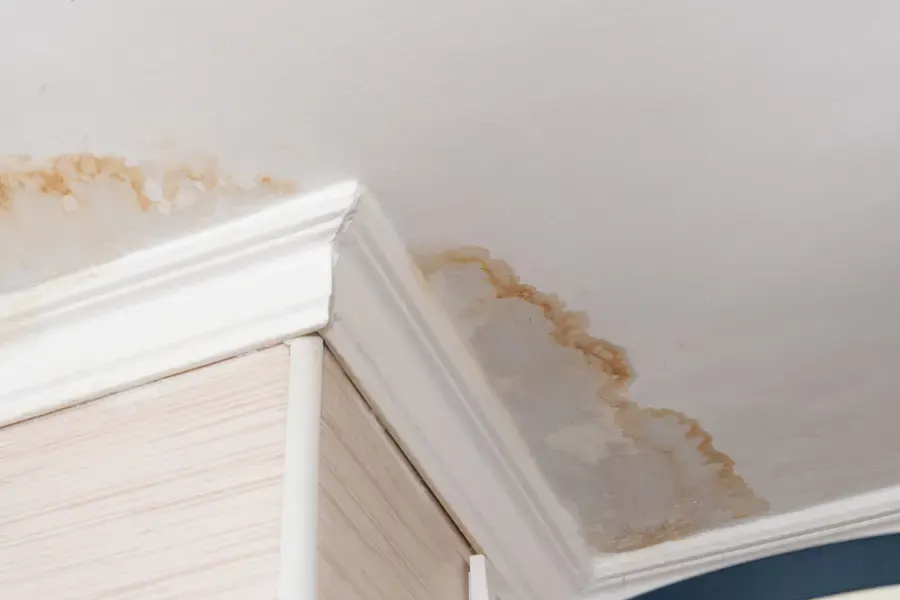
A ceiling leak is water coming from inside the house: an upstairs bathroom, a laundry room over the living space, a supply pipe in the floor framing or an attic system. Two-story homes are common across Rancho Vista, Anaverde and East Palmdale, and in those homes the kitchen or family room ceiling often sits directly under a bathroom. For leaks that start at the roof itself, see roof leak water damage.
Common sources of ceiling leaks
- A failed wax ring or supply connector at an upstairs toilet
- Shower pans and tub drains that leak into the framing
- Upstairs washer hoses and drain lines
- Supply pipes in the floor between levels
- Attic AC condensate pans and swamp cooler ducts
Water pooling above drywall is heavy, and a ceiling can sag and fail without much warning. Water near light fixtures and ceiling fans is also an electrical hazard. The EPA indoor air quality pages explain why damp building materials should be dried quickly.
Ceiling bulging or dripping near a light? Keep people out of the room and call now.
Call about a ceiling leak in PalmdaleHow a ceiling leak is dried
The tech who does the walkthrough uses thermal imaging and meters to find the full wet area, which is usually far larger than the stain. Trapped water is released in a controlled way into containers. If the source is a bathroom, the floor above and the wall cavities are checked too. Wet insulation above the ceiling comes out, ceiling drywall that sags or crumbles is removed, and sound drywall is dried from above and below with air movers and LGR dehumidifiers. Readings are taken daily until the framing is dry. The structural drying page explains the drying goal.
When the stain comes back
A ceiling that is painted over while still wet tends to stain again, and the framing above can stay damp. Drying to a reading before any patch or paint avoids that. The EPA mold and moisture pages cover why hidden moisture matters. If the water came from a cooler or an AC pan, see swamp cooler and AC leaks.
Stains are only the outline
Water spreads across the top of drywall and along joists before it shows below. Meters and thermal imaging, not the stain, set the size of the repair.