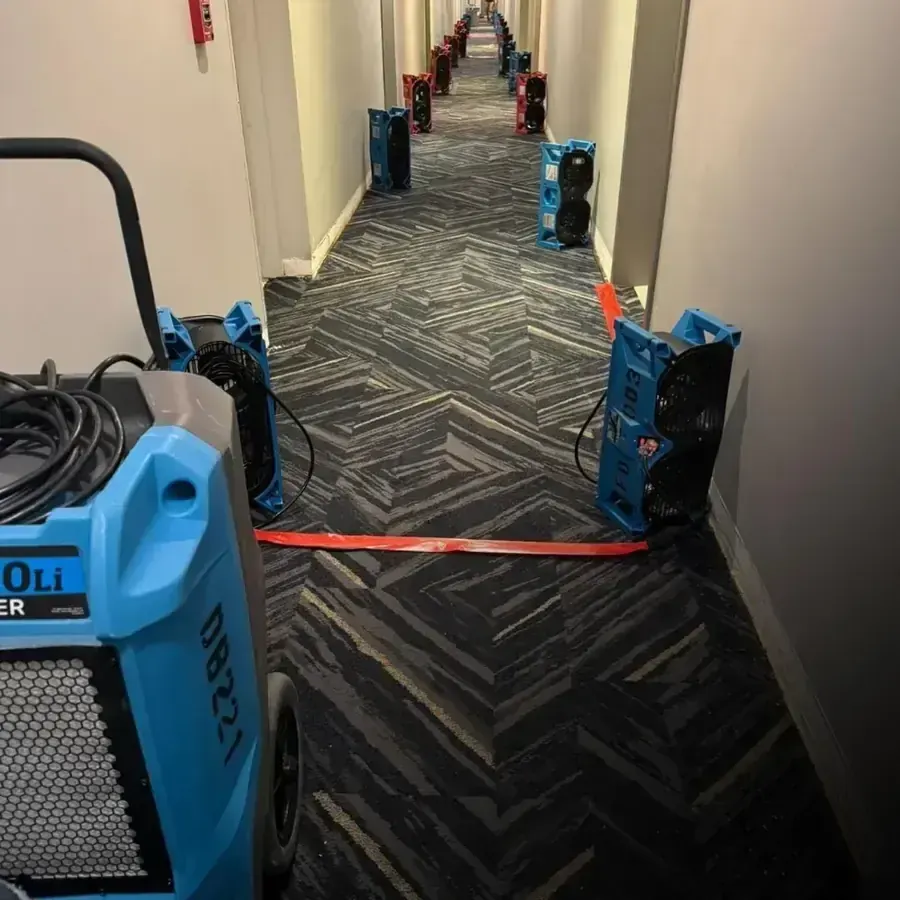
Commercial water losses in Palmdale range from a burst supply pipe in a Palmdale Boulevard office to a roof leak over a shopping center tenant, a restaurant kitchen backup or a sprinkler pipe that froze in a warehouse near the airport. The water behaves the same way it does in a home, but the stakes are different: lost business days, tenants, inventory and equipment.
What commercial drying involves
- Large-capacity extraction and LGR dehumidifiers sized to open floor plans
- Moisture mapping across suites, walls and shared ceiling spaces
- Containment to keep unaffected areas open for business
- Drying schedules staged around business hours where possible
- Daily readings and photo logs for owners, tenants and adjusters
Commercial spaces often have commercial carpet tile, suspended ceilings, and walls that run above the ceiling grid, so water can travel between suites. The tech who does the walkthrough maps those paths before equipment goes down. The Ready.gov business preparedness pages cover continuity planning for water emergencies.
Water in a store, office or warehouse? Get extraction started before it reaches the next suite.
Call about commercial water damageKeeping the doors open
Where the loss allows it, the response team sets containment so part of the building stays in use, runs equipment overnight in customer areas and coordinates with property managers on access. Category 3 losses such as sewage or runoff require more containment and material removal, as the sewage backup cleanup page explains. The OSHA site covers workplace safety rules that apply during cleanup.
Documentation for owners and tenants
A commercial claim file often involves the owner, tenants and more than one insurer. Moisture maps, daily psychrometric logs, timestamped photos before any demolition and the category and class of the loss give everyone the same record. The structural drying page explains how the drying goal is measured.
Every suite gets its own readings
Shared walls and ceilings mean water can reach a neighboring tenant. Mapping each suite separately keeps the scope and the claim file clear.