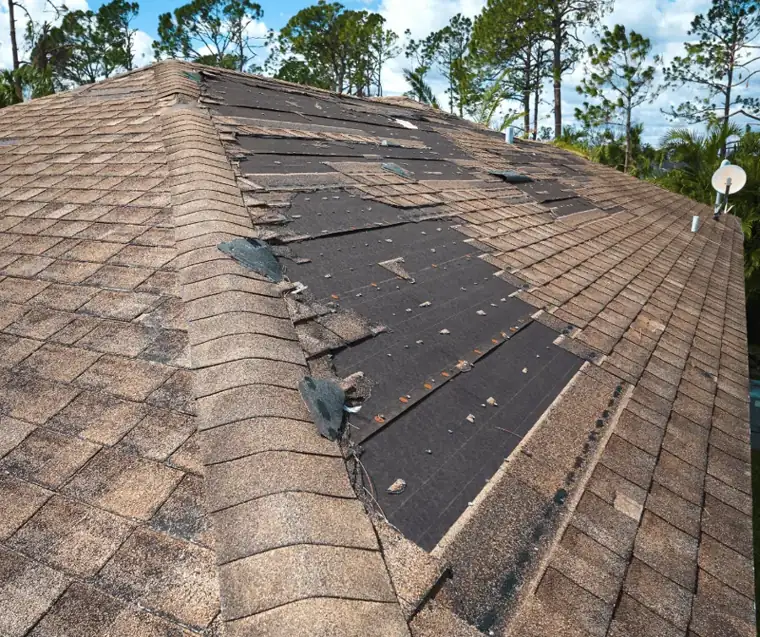
Wind is part of life in the Antelope Valley. Strong westerly winds and occasional Santa Ana events push across the valley floor, and gusts lift concrete tiles, crack ridge caps and peel back shingles. The roof may look fine from the street. Then a winter storm or a summer monsoon cell drops heavy rain, and the water finds the gap and runs into the attic.
How roof leaks become interior damage
- Wind-lifted or cracked tiles let rain reach the underlayment
- Torn shingles and damaged flashing at vents and chimneys
- Roof jacks for swamp coolers and vents that pull loose
- Worn underlayment under older tile roofs
- Clogged valleys that push water under the roof covering
Water that gets past the roof covering soaks attic insulation first, then the ceiling drywall, and sometimes runs down inside exterior walls. The National Weather Service wind safety page explains high wind warnings, which are worth watching before a storm arrives.
Rain coming through the ceiling after a wind storm? Get buckets under it and call.
Call about a roof leak in PalmdaleTwo jobs: the roof and the interior
A roofer tarps and repairs the roof. The restoration team handles everything inside. The tech who does the walkthrough checks the attic and maps the ceiling and walls with thermal imaging and meters. Wet insulation is removed, ceilings that sag are taken down, and sound drywall is dried in place with air movers and LGR dehumidifiers. Storm water that ran through attic dust and debris may be treated as Category 2. For leaks that come from plumbing rather than the roof, see ceiling leak water damage.
Document the storm and the damage
Photos of the roof damage, the date of the wind event and the interior damage help the claim file tell one clear story. The Ready.gov severe weather page has a checklist for preparing a home before storm season. Daily moisture readings show the adjuster when the interior reached dry.
A tarp is not a dry-out
Stopping new water is the first step, but the attic insulation and ceilings stay wet until they are removed or dried. Equipment stays until readings reach the goal.