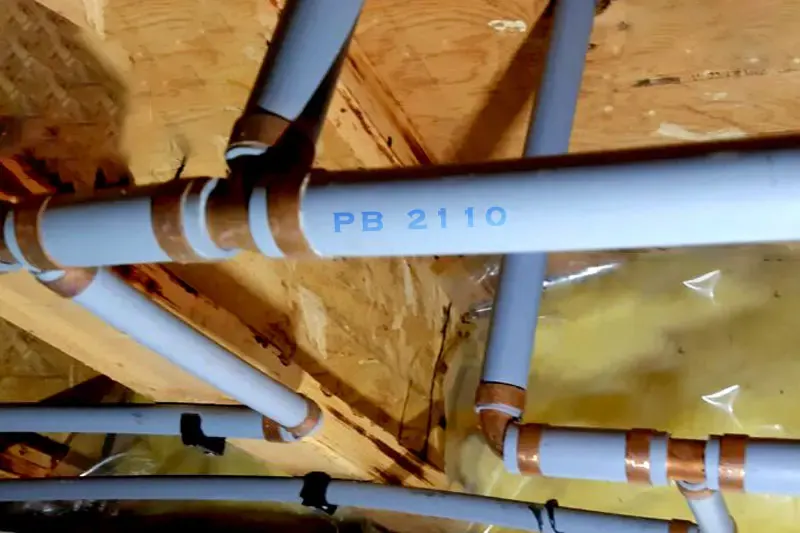
Polybutylene is the flexible gray, and sometimes blue or black, plastic supply pipe that was installed in millions of American homes from about 1978 to 1995. Palmdale grew fast during exactly those years, so many tract homes on the west side and in East Palmdale were plumbed with it. The pipe is often stamped PB2110 and joined with copper or aluminum crimp rings or plastic fittings.
Why polybutylene fails
Over time the pipe and its fittings can become brittle, especially where chlorinated water has flowed through them for decades. Failures tend to happen at the fittings and bends rather than along a straight run, and they often happen without warning: a fitting in the attic or a wall simply lets go under normal water pressure. Because the pipe is often run through attics in Antelope Valley homes, a failure frequently shows up as water through the ceiling.
- Gray pipe marked PB2110 at the water heater or under sinks
- Copper or aluminum crimp rings at the joints
- Plastic elbows and tees in the attic runs
- A history of small leaks at fittings that were patched
If you are not sure what is in your walls, check the pipe where it enters the water heater or comes out of the wall under a sink. The EPA WaterSense leak checks can help you spot a slow leak from the meter.
Water coming through the ceiling from an attic fitting? Shut the main and call.
Call about a polybutylene leak in PalmdaleHow a polybutylene leak is dried
A plumber repairs the failed fitting, and many owners use the moment to plan a repipe. The restoration team focuses on the water. The tech who does the walkthrough maps wet drywall, insulation and flooring with meters and thermal imaging. Soaked attic insulation comes out, ceiling drywall that sags is removed and sound drywall is dried in place. Air movers and LGR dehumidifiers run until the framing and drywall read dry, and daily readings go into the claim file.
One leak often means more
When one polybutylene fitting fails, others of the same age are under the same stress. Documenting the pipe type in photos helps the plumber and the adjuster understand the loss. The burst pipe cleanup page covers failures in copper supply pipe, and the EPA moisture guidance explains why wet attic insulation should not be left in place.
Photograph the pipe before it is replaced
A clear photo of the failed fitting and the PB markings gives the claim file a record of the pipe type and the failure point.