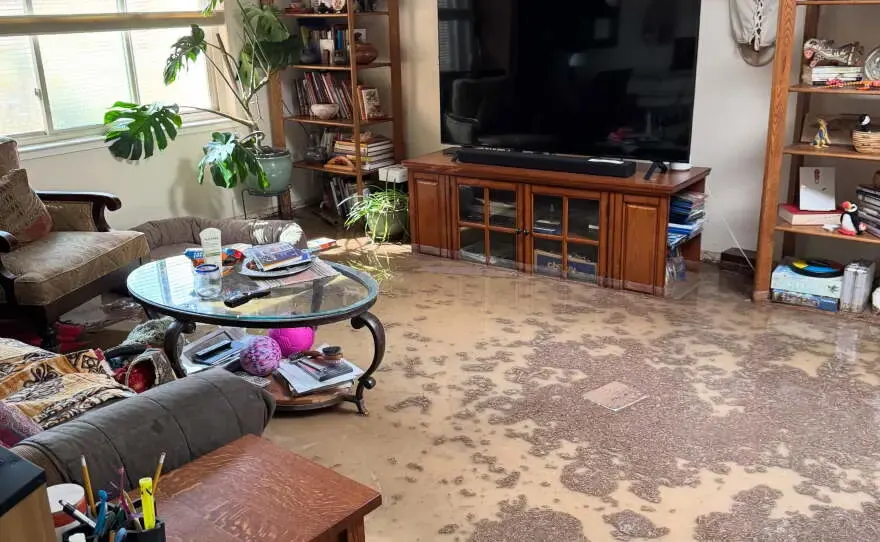
Flash floods in the Antelope Valley come from two directions. Summer monsoon thunderstorms, usually July through September, can drop an inch of rain in a short burst on hard, dry ground that cannot absorb it. Winter Pacific storms bring longer rain that fills the washes. Either way, the water moves fast, picks up sand and silt, and follows streets and lots toward Amargosa Creek, Anaverde Creek, Littlerock Wash and Big Rock Wash.
Why runoff is treated as Category 3
Runoff that crosses yards, streets and open desert carries soil, animal waste, oil and whatever it picked up on the way. That makes it Category 3 water the moment it comes inside. Porous materials it touches, like carpet, pad, the bottom of drywall and insulation, are removed rather than dried. Hard surfaces are cleaned, and an EPA-registered antimicrobial is applied before the drying starts.
- Mud and silt shoveled and extracted from floors
- Carpet, pad and wet drywall cut out above the water line
- Containment and HEPA air scrubbers while materials come out
- Hard surfaces cleaned and treated before drying
Never drive or walk through moving flood water; a few inches can knock a person down. The National Weather Service flood safety page explains flash flood warnings, and Los Angeles County Public Works manages flood control channels and storm drains in the county.
Muddy water came in under the door? Stay out of it until power is off, then call.
Call about flood cleanup in PalmdaleWhere flooding hits hardest around Palmdale
Homes on lower lots, near the washes and at the end of long downhill streets take the most runoff. East valley areas like Lake Los Angeles, Littlerock and Sun Village see flooding on dirt roads and open lots, and hillside neighborhoods in Anaverde and Ritter Ranch see water come off the slopes. Garages flood first because the slab often sits lower than the house. Structural drying starts once the mud and contaminated materials are out, as the structural drying page explains.
Flood coverage is its own question
Surface water from outside is usually handled under flood insurance, not a standard homeowners policy. The claim file still needs photos of the water line, the category and daily drying logs.