Drying to a verified reading

Structural Drying & Dehumidification in Palmdale, CA

Surfaces dry in a day; framing, slab and wall cavities do not. The drying team sets equipment to each room's load and pulls it only when the readings match a dry reference.

(888) 774-9605Get extraction started in Palmdale
IICRC S500 drying standard LGR dehumidification Daily moisture readings
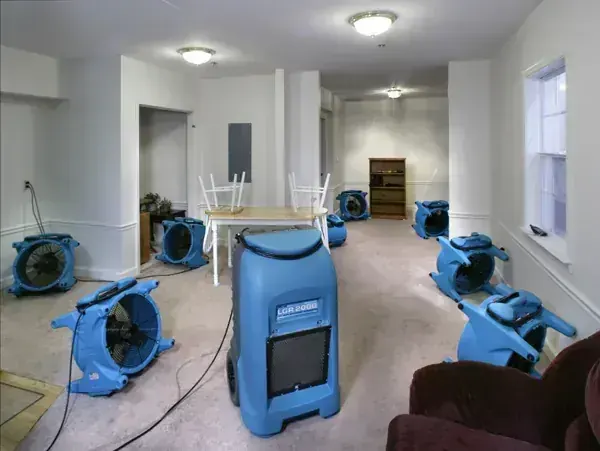
Air movers and an LGR dehumidifier drying an open Palmdale room to the S500 goal
StandardIICRC S500
ClassesClass 1 to 4
Key toolsLGR dehumidifiers
Typical dry time3 to 5 days
Typical cost

What does structural drying and dehumidification cost in Palmdale, CA?

In Palmdale, CA, structural drying and dehumidification typically runs $1,000 to $10,000 or more, depending on the class of the loss, the number of rooms and levels involved, the materials being dried and how many days the equipment runs.

Class 1 or 2, one area
$1,000 to $2,500
  • Moisture map and air movers
  • One or two dehumidifiers
  • Three days of readings
Several rooms
$2,500 to $5,500
  • LGR dehumidifiers
  • Cavity and floor drying
  • Daily moisture logs
Class 3 or 4 materials
$5,500 to $10,000+
  • Hardwood, plaster or slab
  • Desiccants and mats
  • Extended drying

What moves the number: the class of the loss, the square footage and number of levels, the materials being dried, and how long equipment has to run.

For a closer planning range, try the water damage cost calculator. These ranges are typical, not a quote.

Do this now

What to do the moment you find structural drying

  1. Stop the water

    Make sure the source is off before drying starts.

  2. Keep the house closed

    Let the dehumidifiers work; open windows can bring in humid or dusty air.

  3. Leave equipment running

    Do not switch off air movers or dehumidifiers overnight.

  4. Keep the readings

    Ask for the daily moisture log for your claim file.

The process

How structural drying is handled in Palmdale

  1. Walkthrough and moisture map

    The tech who does the walkthrough finds the source and maps how far the water traveled, using thermal imaging and pinless meters.

  2. Extraction

    The extraction crew pulls standing water with truck-mounted extraction, so it leaves the building instead of moving to the next room.

  3. Drying set to the room

    The drying team sets air movers to each room's evaporation load and runs LGR dehumidifiers, with desiccants for dense Class 4 materials.

  4. Readings to dry

    Most crews record readings daily and pull equipment once wet materials read within 2 to 4 points of a dry reference.

Structural drying is the part of a water loss that decides whether the problem comes back. Extraction removes the water you can see. Structural drying removes the water that soaked into drywall, framing, subfloor, cabinets and concrete. IICRC S500 is the industry drying standard, and it sets the order: inspect, map moisture, extract, dry and verify with readings.

How the drying plan is set

  • Moisture mapping with pinless meters and thermal imaging before any equipment goes down
  • Class 1 to 4 sets how much equipment a room needs, from a small wet area to dense materials like hardwood, plaster and concrete
  • Air movers placed to the evaporation load of each room
  • LGR dehumidifiers pull the moisture back out of the air; desiccants handle dense Class 4 materials
  • Daily readings logged against a dry reference material in the same house

The drying goal is not a date. Crews compare readings in wet materials with a dry reference in an unaffected part of the home, and equipment comes out when the wet material reads within 2 to 4 points of it. The EPA moisture and mold pages explain why materials must be fully dry, not just dry on the surface.

Walls still damp days after a leak? Readings show whether drying is actually finished.

Call about structural drying in Palmdale

Drying in the high desert

Palmdale's outdoor air is often very dry, which helps once the water is out. But closed-up houses, hot attics and cold winter nights all change how fast materials release water. In summer, drying areas can overheat; in winter, cold slows evaporation. The drying team manages temperature and airflow along with dehumidification, and adjusts equipment as readings come in. The EPA indoor air quality pages cover why moisture control matters indoors.

Drying in place versus removal

Clean-water drywall caught early can often be dried in place with small openings for airflow. Materials touched by Category 3 water, such as sewage or flood runoff, are removed rather than dried. Hardwood floors get specialty drying mats that pull water up through the boards.

Equipment leaves on readings, not on a schedule

A contained Class 1 loss usually dries in three to five days. Hardwood, plaster and slab take longer. The daily log shows when the drying goal is met.

Service area

Structural Drying and Dehumidification coverage across Palmdale

The restoration team handles structural drying and dehumidification in every Palmdale ZIP and the Antelope Valley towns around it.

Palmdale, CA and the Antelope Valley

The Palmdale restoration crew handles structural drying and dehumidification across Rancho Vista, Anaverde, Ritter Ranch, central Palmdale, Desert View Highlands and East Palmdale, plus Lake Los Angeles, Littlerock, Quartz Hill and Lancaster.

ZIP codes 93550, 93551, 93552, 93590, 93591 and 93599 are all covered.

See every neighborhood and ZIP covered
FAQ

Structural Drying and Dehumidification questions in Palmdale, CA

What is structural drying?

It is drying the building materials themselves, including framing, drywall, subfloor and concrete, to a verified moisture reading, not just drying the surfaces.

What is the IICRC S500 standard?

IICRC S500 is the industry drying standard for water damage. It sets the order of work and the idea of drying to a measured goal.

How is dry defined?

Crews compare wet materials with a dry reference material in the same house. Materials are dry when they read within 2 to 4 points of that reference.

Why is the equipment so loud and why does it run all night?

Air movers and dehumidifiers work around the clock because evaporation does not stop at night. Turning them off slows drying and can extend the job.

What is the difference between LGR and desiccant dehumidifiers?

LGR dehumidifiers pull moisture from air efficiently in most conditions. Desiccant units dry air very deeply and are used for dense Class 4 materials or cold conditions.

How long does structural drying take?

Three to five days for a contained Class 1 or 2 loss. Hardwood, plaster and concrete can take a week or more.

Emergency dispatch

Structural Drying and Dehumidification in Palmdale? Call now.

The longer the water sits, the further it wicks into slab, drywall and framing. The Palmdale water damage pros answer day or night.

Call (888) 774-9605 · 24/7 water removal