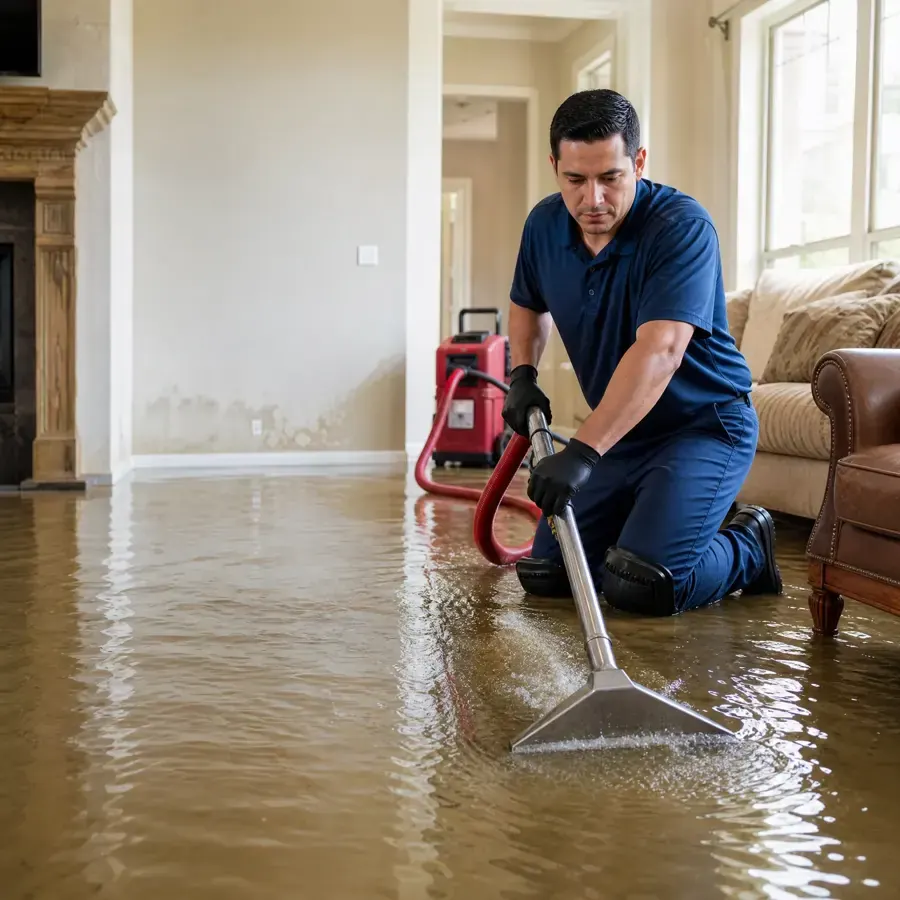
Extraction is the first move on every water loss in Palmdale, whatever the source: a split supply pipe, a failed water heater in the garage, a swamp cooler that overflowed or runoff that came in under the door. Most homes here sit on concrete slabs, so water does not drain away. It spreads sideways under carpet pad, laminate and baseboards, then wicks up the drywall. Every gallon left on the floor becomes moisture the drying equipment has to pull out of the structure later.
Why extraction comes before drying
A dehumidifier removes water from the air a few gallons at a time. A truck-mounted extraction unit removes it from the floor by the hundreds of gallons. The extraction crew pulls standing water first, then goes back over carpet and pad with weighted extraction tools that squeeze water out of the fibers. That order cuts drying time by days and keeps more of the flooring salvageable.
- Truck-mounted units exhaust the water outside, so it leaves the building
- Portable extractors reach upstairs rooms and tight closets
- Weighted tools and floor mats pull water out of carpet and hardwood seams
- Moisture mapping shows how far the water traveled under the flooring
Standing water near outlets and cords is a shock hazard, so shut off power to wet rooms at the breaker only if the panel is dry. The Ready.gov flood safety page covers electrical safety around indoor water.
Water still sitting on the floor? Every hour it sits, it climbs higher into the walls.
Get water extraction started in PalmdaleWhat happens to carpet, pad and hardwood
Clean Category 1 water caught early often lets the drying team float the carpet and dry it in place, with the pad replaced underneath. Pad soaked by gray or black water comes out. Hardwood and engineered floors get specialty drying mats that pull water from between the boards. Tile over slab dries well, but the grout and the wall base still need readings. The structural drying page explains how the drying goal is set.
The 24 to 48 hour window
Mold can start to grow on wet drywall, pad and wood inside 24 to 48 hours, even in dry desert air. The EPA mold and moisture pages explain why fast drying matters. That window is why extraction is treated as an emergency, day or night, and why the drying team sets equipment on the same visit.
Extraction is judged by what is left behind
The goal is not a floor that looks dry. Crews check the pad, the tack strip and the bottom of the drywall with meters, and extraction continues until the tools stop pulling water.